Showing posts with label pune. Show all posts

Thursday, January 10, 2013

Toyota India Unveils the Limited Edition Live


To mark the primary day of remembrance of the Toyota Etios Liva, Toyota has launched a edition referred to as the Liva TRD Sportivo. 

The Sportivo, designed by Toyota sport Development (TRD), Japan, comes with a gaudy front lip spoiler, facet skirts, two-tone rear spoiler and roof spoiler. it's conjointly equipped with smoked-design alloy wheels, sport graphics on the body, a TRD Sportivo badge, new seat cloth and a silver gear shift knob.
Speaking at the launch, Sandeep Singh, deputy decision maker, marketing, Toyota Kirloskar Motors (TKM), said, “The Liva TRD Sportivo edition may be a fashionable and gaudy vehicle for the ever-enthusiastic and spirited youth of these days. it'll supply product exclusivity and excitement, so enhancing the possession expertise and image of the Etios Liva. TKM has undertaken several active steps to cater to the vernal market, and this is often only one such initiative to any our efforts.”

The automotive are offered in white and pigment colors, and can get on sale until Oct 2012. solely 1200 units of the edition automotive are oversubscribed.


Saturday, January 14, 2012

Toyota Etios


The Toyota Etios is a line of four-door sedan and hatchback cars produced by Japanese automobile manufacturer Toyota exclusively for the Indian Market. The Etios nameplate comes from the Greek "Ethos", meaning spirit, character, and ideas. The sedan version was launched in December 2010 and the Liva hatchback was launched in June 2011. As of 2011, the first generation of Etios has sold more than 30,000 units in India. The Toyota Etios was first showcased at the 2010 Auto Expo in Delhi as a 'concept car'. Trim levels for the Etios are: J, G, G+, V and VX.
The amazing Etios has its engine imported from Japan. The petrol variant comes in 1.5 and the diesel in 1.4 variants.
We are very happy to introduce the Toyota Etios into our fleet. You can now call us for a brand new Toyota Etios at your doorstep with a great chauffer and an experience that you will love!
Call us for exciting offers in Pune for cars on hire for local and outstation.
We offer special deals for occasions such as weddings, ceremonies and corporate events. 
Call us at +91 98501 58728

Thursday, December 8, 2011

Koregaon Park, Pune

Koregaon Park, Pune. Image source.


Koregaon Park is an area in Pune south to Mula-Mutha River. The area is often viewed as the most posh place in the city of Pune. This area was primarily a residential area with lush green scenery but of late has been growing into a commercial market place in Pune city. However, the old bungalows and parks can still be seen in the numerous narrow lanes of Koregaon Park. 


Roads and Connectivity 
 The neighborhood of Koregaon Park has two major roads: North Main Road (which lies in the north of Koregaon Park) which runs in parallel with South Main Road(south of Koregaon Park). Link roads connect these two major roads. Koregaon Park is connected with another upcoming neighborhood Kalyani Nagar via the Aga Khan Bridge. Passage to Mundhwa and Magarpatta has been made possible by recently constructed road. The quiet Cantonment place is a couple of kilometres away. Koregaon Park is conveniently located approximately 6 km from the Pune International Airport and about 3–4 km from the city's main railway station. This region is surrounded by Kalyani Nagar, Yerwada, Ghorpadi, Magarpatta and Sangamwadi area. This area serves a link between traffic from Old Mumbai - Pune road to Pune - Ahmednagar road.


Schools 
 The neighborhood contains the Poona School and Home for Blind which is located on North Main Road. Sant Gadhge Maharaj school is also located on South Main Road.


Dining 
This area has the famous German Bakery, Chabad house, Osho Ashram and Bund Garden. On 13 February 2010 a terrorist attack took place in this area on German Bakery. People from all over Pune flock to Koregaon Park for its lounges,pubs and eateries. German Bakery is currently being re-constructed after the unfortunate terrorist attack in 2010. Places like Prem's, Kue Bar, Hard Rock Cafe,Stone Water Grill,Aromas and Kiva are a hit with the crowds. Further, the place is filled with cafes such as Mocha, Sweet Chariot Cafe and so on. O Hotel is a five star hotel with chains all over India. Koregaon Park is openly acknowledged to be the amongst the most happening places in the city of Pune if not the most.


Hospitals 
 The neighborhood contains the well-known Inlaks and Budhrani Hospital. 


Well-known Places 
 Osho International Meditation Resort 
The Westin Pune 
Koregaon Park ABC Farms


Source: Wikipedia. Retrieved December, 09, 2011 from http://en.wikipedia.org/wiki/Koregaon_Park.

Thursday, August 5, 2010

What is Pune ?


Pune, "पुणे" also known as 'Punawadi' or Punya-Nagari, is the eight largest city and eighth largest metropolis in India, and the second largest in the state of Maharashtra, after Mumbai. Once the center of power of the Maratha Empire, situated 560 metres above sea level on the Deccan plateau at the confluence of the Mula (Marathi: मुळा) and Mutha rivers (Marathi: मुठा),[4] Pune is the administrative capital of Pune district.
Pune is known to have existed as a town since 937 AD.[5] Chhatrapati Shivaji Maharaj, the founder of the Maratha Empire, lived in Pune as a young boy, and later oversaw significant growth and development of the town during his reign. In 1730, Pune became an important political centre as the seat of the Peshwa, the prime minister of the Chhatrapati of Satara. After the town was annexed to British India in 1817, it served as a cantonment town and as the "monsoon capital" of the Bombay Presidency until the independence of India!.[6]
Today, Pune is known for its educational facilities, with more than a hundred educational institutions and nine universities.Pune is primararily a Hindu city and one can see temples all over the city,the people of Pune are religious and proud of their religion and their launguage Marathi.[7] Pune has well-established manufacturing, glass, sugar and forging industries since the 1950-60s. It has a growing industrial hinterland, with many information technology and automotive companies setting up factories in Pune district. The city is known for various cultural activities like classical music, spirituality, theater, sports, and literature. These activities and job opportunities attract migrants and students from all over India and abroad, which makes for a city of many communities and cultures.

Ganesh / Ganesha Festival Pune

God Ganesh

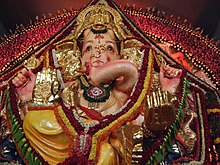
Also known as The Ganesh Chaturthi, Vinayaka Chaturthi, is the Hindu festival of Ganesha, the elephant-headed son of Shiva and Parvati, who is believed to bestow his presence on earth for all his devotees in the duration of this festival. It is the birthday of Lord Ganesha who is widely worshiped as the god of wisdom, prosperity and good fortune.
The festival is observed in the Hindu calendar month of Bhaadrapada, starting on the shukla chaturthi (fourth day of the waxing moon period). The date usually falls between 20 August and 15 September. The festival lasts for 10 days, ending on Anant Chaturdashi (fourteenth day of the waxing moon period).
While celebrated all over India, it is most elaborate in Maharashtra, Goa, Gujarat, Karnataka, Tamil Nadu and Andhra Pradesh. Outside India, it is celebrated widely in Nepal and Tamil Hindus in Sri Lanka.

Before 1893, Ganesh Chaturthi used to be an important family festival during the Peshwa rule in Maharashtra, but that year, Indian freedom fighter and social reformer Lokmanya Tilak transformed the annual festival into a large, well-organized public event[1].
Tilak recognized the wide appeal of the deity Ganesh as "the god for everybody"[2][3], and popularized Ganesh Chaturthi as a national festival in order "to bridge the gap between Brahmins and 'non-Brahmins' and find a context in which to build a new grassroots unity between them", and generate nationalistic fervor among people in Maharashtra against the British colonial rule[4][5].
Tilak encouraged installation of large public images of Ganesh in pavilions, and also established the practice of submerging in rivers, sea, or other pools of water all public images of the deity on the tenth day after Ganesh Chaturthi[6].
Under Tilak's encouragement, the festival facilitated community participation and involvement in the form of intellectual discourses, poetry recitals, performances of plays, musical concerts, and folk dances. It served as a meeting ground for people of all castes and communities in times when, in order to exercise control over the population, the British discouraged social and political gatherings.


The festival is observed in the Hindu calendar month of Bhaadrapada, starting on the shukla chaturthi (fourth day of the waxing moon period). The date usually falls between 20 August and 15 September. The festival lasts for 10 days, ending on Anant Chaturdashi. This festival is observed in the lunar month of bhadrapada shukla paksha chathurthi madhyahana vyapini purvaviddha. If Chaturthi prevails on both days, the first day should be observed. Even if chaturthi prevails for the complete duration of madhyahana on the second day, if it prevails on the previous day's madhyahana period even for one ghatika (24 minutes), the previous day should be observed.[7]

 
Two to three months prior to Ganesh Chaturthi, artistic clay models of Lord Ganesha are made for sale by specially skilled artisans. They are beautifully decorated & depict Lord Ganesh in various poses. The size of these statues may vary from 3/4th of an inch to over 25 feet.
Ganesh Chaturthi starts with the installation of these Ganesh statues in colorfully decorated homes and specially erected temporary structures mandapas (pandals) in every locality. The pandals are erected by the people or a specific society or locality or group by collecting monetary contributions. The mandapas are decorated specially for the festival, either by using decorative items like flower garlands, lights, etc. or are theme based decorations, which depict religious themes or current events.

The priest, usually clad in red silk dhoti and shawl, then symbolically invokes life into the statue by chanting mantras. This ritual is the Pranapratishhtha. After this the ritual called as Shhodashopachara (16 ways of paying tribute) follows. Coconut, jaggery, 21 modakas, 21 durva (trefoil) blades of grass and red flowers are offered. The statue is anointed with red unguent, typically made of Kumkum & Sandalwood paste . Throughout the ceremony, Vedic hymns from the Rig Veda, the Ganapati Atharva Shirsha Upanishad, and the Ganesha stotra from the Narada Purana are chanted.

For 10 days, from Bhadrapad Shudh Chaturthi to the Ananta Chaturdashi, Ganesha is worshipped. On the 11th day, the statue is taken through the streets in a procession accompanied with dancing, singing, and fanfare to be immersed in a river or the sea symbolizing a ritual see-off of the Lord in his journey towards his abode in Kailash while taking away with him the misfortunes of his devotees, this is the ritual known as Ganesh Visarjan. At individual homes the Visarjan is also done on 3rd, 5th or 7th day as per the family tradition. All join in this final procession shouting "Ganapathi Bappa Morya, Pudhachya Varshi Laukar ya" (O lord Ganesha, come again speedily next year). After the final offering of coconuts, flowers and camphor is made, people carry the statue to the river to immerse it.
The main sweet dish during the festival is the modak (modagam or modakam in South India). A modak is a dumpling made from rice flour/wheat flour with a stuffing of fresh or dry-grated coconut, jaggery, dry fruits and some other condiments. It is either steam-cooked or fried. Another popular sweet dish is the karanji (karjikaiin Kannada) which is similar to the modak in composition and taste but has a semicircular shape.
Public celebrations of the festival are hugely popular, with local communities (mandalas) vying with each other to put up the biggest statue & the best pandal. The festival is also the time for cultural activities like singing and theater performances, orchestra and community activities like free medical checkup, blood donation camps, charity for the poor, etc.
Today, the Ganesh Festival is not only a popular festival, it has become a very critical and important economic activity for Maharashtra. Many artists, industries, and businesses survive on this mega-event. Ganesh Festival also provides a stage for budding artists to present their art to the public. The same holds true for Hyderabad and Chennai too.

Hotels in Pune

GRT Grand 1600 44 5500
InterContinental Hotels Group 1600 111  000
Marriott 1600 22 0044  
Sarovar  Park  Plaza 1600 111 222
Taj Holidays 1600 111 825  

24 Hours Open Petrol Pump in Pune

Supreme Automobiles Opp. Garware Nylons, Mumbai Pune Road, Pimpri
Tel : 27472456
Kulkarni Automobiles Petrol Pump 554/1, Sadashiv Peth, Laxmi Road
Tel : 24452958, 24455540
Shri Seva 1082, Ganeshkind Road,
Tel : 25655707
Saraswati Auto Service Shankarsheth Road,
Tel: 24441238
Scooter Service Station Near PMT Bus Stop, Pul Gate
Tel : 26363541
Bright Star Services 12/Am Sadhu Vaswani Chowk,
Oppst. Parmar Chambers
Tel : 26129666, 26125916
Alpha Service Station Oppt. Wakdewadi Railway Crossing, Mumbai Pune Road,
Tel : 25510981, 25512677
Ambika Petrol Depot 26122280
Anand Service Station 25817980
Bharat Petrol Depot 24334267
Bright Star Petrol Pump 26125916
Bright Travels 26129666
Kakade Dhananjay B. 24473978
Kirad Service Station 26135223
M & D Sales and Services 26351410
N M Service Station 26124853
Rohini Service Station 26135535
Shri Sai Service Station 25532118
Vidhya Petrol Pump 26874200
Yadav Service Station 27012370

24 HRS. PETROL PUMPS ( Pune )
Name Phone No.
Kulkarni Petrol Pump Laxmi Road , Pune - 30
24452958 /5540
Saraswati Auto Services Shankarshet Road , Pune -1
24441238/5264
Scooter Service Station Poolgate , Pune - 1 26363541/3221    
Shree Seva, University Road, Pune 25655707/25672945
Bright Star Services Pune Station , Sadhu Vaswani Road 26050880
Alpha Service Station, Wakdewadi, Mumbai - Pune Highway 25512677/0981
24 HRS. PETROL PUMPS (P.C.M.C)
Supreme Automobile, Pimpri 27472456

PETROL PUMPS (PUNE)
Name Phone No.
Ace Car Care 26126168
Amrapali Service Station 24216160
Ambika Petrol Depot 26122280
Anand Service Station 25817980
Ashwini Distriputers 25533300
B.U. Bhandari Service Station 25531270
Bharat Petrol Depot 24334267
Bright Star Petrol Pump 26125916
Bright Travels 26129666
Excel Service Centre 25440082
Indian Oil Corporation Ltd. 25674456
Kakade Dhananjay B. 24473978
Kankariya Service Station 27030078
Kedari Service Station 26854476
Kirad Service Station 26135223
Kulkarni Petrol Pump 24452958
Laxmi Diesel Sales & Services 25230418
Mahalaxmi Oil Agency 25236333
M & D Sales and Services 26351410
Maharashtra Gasoline Station 26346593
Mar-K-Tech 24492451
Meher Petrol Station 25815628
N M Service Station 26124853
Naik And Co 24482818
Noushar Petrol Pump Service 24376040
Perfect Diesel 27010665
Poonam Enterprises 26128642
Premchand Laxmichand Sons 25538663
Rahim Service Station 26135535
Rohini Service Station 26135535
Rudra Petroleum Services 22951477
Shri Sai Service Station 25532118
S.K. Auto Care Petrol Pump 26933467
Sangoi Service Station 22553651
Servo Care 25423871
Shree Diesel Services 24337321
Shri Siddheshwar Service Station 26990328
Spark Service Station 24221058
United Oil Company 26353004
Vardhaman Lubricants 24211344
Vidhya Petrol PumpServo Care 26874200
Vikas Petroleum 26990228
Yogesh Lubricants 27129427
Yadav Service Station 27012370

PETROL PUMPS (P.C.M.C)
Name Phone No.
Alpha Service Station 25810081
Gajanan Service Station 27128686
Industrial Service Station 27482704
Sainath Automobile Industries 24390304
Supreme Automobiles 27471228
Tejasingh & Sons 27147825
 

Fire Station In case of Fire

Aundh 25883098
Budhwar Peth 24458950
Bhosari 27120090
Erandwane 25468373
Central Fire Brigade Stn 2645 1707/2644 2101
Cantonment 2645 0453
Rahatni 2727 6749
Suburban (Pune Station) 2612 2545
Khadki 2581 9155
Nigdi 2765 2066
Hadapsar 26870207
Pimpri Chinchwad 27473333
Yerewada 26696400

Numbers of Courier Services in Pune

Flypak Couriers
Shukrawar Bajirao Rd 24477590
Access Worldwide
Navi Peth 24335490/24335460
Ahad Tours International
Salunke Vihar 26812978
First Flight
Shivaji Nagar 25535933
Chinchwad 27470838
Tilak Road 24491140
Hadapsar 26813777
Pune Station 26122283
Synagogue Street 26133554/26132644
Karve Road 25421005
Lonavala 292470658
Blue Dart Express Ltd.
Bund Garden Road 26120638/26123706/26127440
Karve Road 24004551/25432810
Toll-free numbers:  
ABT Courier  1600 44 8585
AFL Wizz 1600 22 9696
Agarwal Packers & Movers 1600 11  4321
Associated Packers P Ltd 1600 21 4560
DHL 1600 111 345
FedEx 1600 22 6161
Goel Packers  & Movers 1600 11 3456
UPS 1600 22 7171  

Day Night Drug Stores / Chemists in Pune

Ruby Hall Clinic Station Road 26123391 - Ext- 263
K.E.M. Medical Store Rasta Peth 26126500
Kotbagi Hospital Drug Store Pune 25887089
Poona Hospital Medical Pune 24331707 - Ext - 215
Krishna Hospital Medical Paud Road 25460625
Amar Medical Store 14 , Yerawada , Pune 6 26693978
Laxmi Medical 29 , Ram Wadi , Pune 14 26682250
Usha Nursing Home Medical - 26344969
Kemps Medical - 26137702
Deendayal Memorial Hospital - 25652497/25651613/25654262 (extn 32)
Chemists and Druggists(Sunday Open)
Amar Medical General Stores - 2669 3978
Mahavir Medicals - 2589 7936
Puno Hospital Medical Store - 2433 8768
Saraswati Medicals - 2663 0485
Medicines (Home Delivery)
Ezzy Medicals - 2634 4247
Kalyani Medicals - 2613 8114
Hari Parshuram Aushadalaya Shaniwar Peth 24451871

Blood Banks in Pune

Ruby Hall Clinic Dhole Patil Road
26136318
Acharya Anandrishiji Pune Blood Bank Poona Hospital, Sadashiv Peth, Pune 411030
24337627
Indian Serological Institute Near Vaikunth, Navi Peth, Pune 411030
24339906/24335244
Navjeevan Shanipar Mandir Road, Pune 411 002
2448 0341
Lokmanya Hospital Chinchwad, Pune 411 033
27459222
Inlaks and Budhrani Koregaon Park, Pune 411 001
26129080 Ext 170
Deendayal Memorial Hospital Fergusson College Road, Pune 411 004
2565 2497/ 5657/ 3332  Ext 49
K.E.M. Hospital Rasta Peth
26125600
Red cross 26120650/26120950
A.F.M.C. Blood Bank 26973290 Ext-6037
Bharati Hospital Katraj, Pune-Satara Rd. Pune 411 043
24226116
Sasoon Hospital Near Pune Railway station, Pune-411 001
2612 8000 
Jehangir Hospital Blood Bank Sassoon Road, Pune 411001
2612 2551 Ext 3122 / 33 
Mathurabai Vasistha Blood Bank Rastha Peth, Pune 411 001
26125600 Ext 324 
Wadia Trust Blood Bank Ruby Hall Clinic, Sasoon Road, Pune 411 001
26123391/98 
Jankalyan Blood Bank Swargate Pune 411 002
24449527/1462/4502 
Deenanath Mangeshkar Hospital Blood Bank Near mhatre Bridge, Pune 411 004
2400 300, 2402 307 
Vishweshwar Blood Bank Padmashree Dr. D Y Patil Medical College & Hosp., Pimpri, Pune 411018
2742 3844 
Pune Chest Hospital Blood Bank Aundh Camp, Pune 411 027
2728 0237
Akshay Blood Bank Gadital, Hadapsar Pune 411 028
2697 6456 
Talera Hospital Blood Bank PCMC, Pune 411 033
2745 7054 
Armed Forces Medical College Blood Bank Wanowrie, Pune 411 040
2697 3290 Ext. 6037 / 38 

Pune City Essential Facts

Pune is also called as the Oxford of the East and the cultural capital of Maharashtra, Pune has grown rapidly over the past few decades.

LANGUAGE: The regional language in Pune City, India is Marathi. Unlike many other Indian regional languages, Marathi is easy to understand, posing not too many problems to the tourist.
It holds with the national language Hindi.

TRAFFIC: Traffic in Pune does get congested and  it is best to travel either via two-wheelers or auto rickshaws in the interiors but that will make you exposed to the unhealthy polluted air cars are thus a safer option. The amount of two-wheelers and women drivers here is probably one of the highest in the country. 

SAFETY: As is with the most of the cites, the intra-city areas are very safe even during the night. Venturing alone or into unknown areas near the ghats or on the outskirts are not advisable.
Though Pune does not report of very serious crime rates, petty thefts etc. are to be watched out for. Do not stop to give lifts or to ask directions during night times in isolated areas. 


CURRENCY:
The Indian Rupee is the used currency. Many new currency exchange points and ATM centers have come up all over the city over the last two years making money very easily accessible for visitors. Always carry loose change in coins for urgent calls, parking etc. Beware of the Rs 500 notes, check them before using.

THE PUNEITE:
The Puneite is definitely much more relaxed and friendly than the average Bombayite. A warm greeting about his wellbeing will do him in and mind you, he’s very touchy about Pune.
The most outstanding aspect of Pune and its people is the sound balance they have maintained between modernity and their age-old rich culture and tradition. No wonder, it’s called the ‘Cultural Capital of Maharashtra’ as well as ‘The Oxford of the East’.


Toyota Innova

Toyota Innova

The Toyota Innova
The Toyota Innova is a toyota designed MPV i.e. being less than 4,600 mm (181.1 in) in length as per the European system of size classification, produced in Indonesia under supervision by Toyota Astra Motor since 2003. As with Toyota Kijang, which it replaced, the Toyota Innova is produced and first marketed in 2004 in Indonesia. Toyota Innova is part of Toyota's IMV program together with Hilux Vigo pickup truck and Fortuner SUV. The official name in Indonesia is Toyota Kijang Innova, while for other countries is just Innova.
Powering the Innova is either 2.0 liter 136 hp (101 kW) 1TR-FE VVT-i, 2.7 liter 2TR-FE VVT-i gasoline, or 2.5 liter 102 hp (76 kW) 2KD-FTV D4-D common rail variable geometry turbocharger Diesel engine. Trim levels are J, E, G, and V. The 2.7 liter is only for V with automatic transmission. It features a live rear axle and it is of front engined rear wheel drive configuration. Newly added V variant adds ABS, leather seats and captain chairs.
The Innova is also sold in India (replacing Toyota Qualis), Malaysia (replacing Toyota Unser), the Philippines (replacing Toyota Revo), Taiwan (replacing outdated Toyota Zace surf), and Thailand. Unlike some of the Innova's competition, such as the TATA Sumo Grande, the newly launched Tata Aria, Chevrolet Tavera or the Mahindra Xylo, the Innova looks more like a minivan — in fact, its styling can be said to be similar to Toyota's other MPV offerings, namely the USDM Toyota Sienna and the Toyota Previa. In addition the Innova was designed to be affordable and not expensive as the other MPVs in India. The Toyota Innova is also available in Brunei, Saudi Arabia, the UAE, and Vietnam. 

Engine:


It has a new engine, different from the older Kijang gasoline engine. Unfortunately, the new engine produces more power (2000 cc) but a litre of petrol (1 litre = 1000 ml) is only capable of 6-8 kilometres (1 miles = 1.6 kilometres, 1 kilometre = 1000 metres). But after the minor change in 2007, the engine is now equipped with close loop combustion system, and based on information from the Auto Bild Indonesia test, consumption of 1 litre of petrol is capable of 11-12 kilometres.


Read more at the official Toyota Innova India Page.

To rent a Toyota Innova in India, contact +91 98221 99899

Difference between Tata India V1 and V2

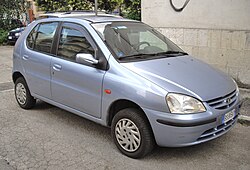
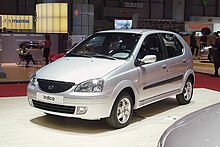
Indica V1 and V2 (1998-present) (1st generation)


When first launched, the Indica prompted many complaints from early purchasers, who claimed that the vehicle did not deliver horsepower and gas mileage as promised.[citation needed] In response to the customer complaints, Tata Motors re-engineered the internals of the car and launched it as Indica V2 (version 2), which solved most of the complaints and emerged as one of the most sought after cars in the Indian automobile industry. Later, it was again updated, now marketed as the "Refreshingly New Indica V2". This was followed by the next variant of Indica, current in early 2008, called the Indica V2 Xeta Petrol, which delivers 70 PS (51 kW; 69 hp) of power at a fuel efficiency of 14 km/l (about 33 mpg U.S., fuel consumption of 7.1 L/100 km) under standard test conditions.[4] In Indian city conditions, fuel economy can drop to about 10 km/l (about 23.5 mpg U.S., 10 L/100 km).[5]
Since the V1 and V2 which were visually identical, Tata had applied styling updates to the Indica in 2004[6] and 2007.[7]
In India, three versions were available with different trim levels.
  • Indica V2 — 1.4 L diesel (naturally aspirated engine in the DLE and DLS; turbocharged option in the DLS; turbocharged and intercooled DLG and DLX; DiCOR engine offered in the DLS and DLG);
  • Indica V2 XETA — 1.2 L petrol (GL: without AC; GLE: with AC; GLS: with AC & Power Steering), 1.2 L LPG (GLE & GLS versions only);
  • Indicab — 1.4 L naturally aspirated diesel (DL and DLE), a low-price car with the same framework but fewer features and luxuries, aimed at cab and contract transport business fleets. Very popular among transport business people.[8] 
  • Originally offered with 1.4L petrol and diesel engines, a turbocharged diesel engine was introduced in October 2005; a 1.2L petrol engine in November 2006 and a DiCOR (Direct Injection Common Rail) diesel version of Indica V2 was launched in January 2008. It features 16 valves, double overhead camshafts, a variable geometry turbocharger and an intercooler. The top end GLG, GLX, DLG, DLX versions and the turbo and DiCOR diesel engines, as well as the 1.4L petrol engines have been phased out with the introduction of the next generation Indica Vista.
    A compressed natural gas (CNG) was launched in 2001.[9] It is offered as an option through OEM Bedini kits offered by Shrimanker Gas Services India on the Indica V2 XETA.[10]
    Faced with numerous CNG-related complaints, TATA organized a systematic recall and retrofit of Bedini equipment which included a new improved Lamda sensor / electronic control unit, Bedini emulator and new wiring harness approved and tested by both TATA and ARAI (Automotive Research Association of India) from 28–31 May 2007. With the new system, TATA aims to improve gas delivery and performance.[citation needed]
    In its home market, the Indica offers good interior capacity and competes with the Maruti Suzuki Swift, Maruti Wagon-R, Maruti Alto, the Hyundai Santro and the Fiat Palio. The diesel versions, however, have little or no competition since few diesel cars exist in the Indica's price bracket.
    The slightly higher-than-average net weight makes for a slightly more comfortable ride compared to lighter cars. Fit and finish continue be criticized compared to offerings from Fiat and Maruti.[11]
    The Indica platform spawned a number of variants, including the Tata Indigo three-box saloon which includes the shorter Indigo CS, Long wheelbase XL and the Indigo Marina estate.
      
    Indica Vista (2008-present) (2nd generation) 

    The Indica Vista was unveiled at the 9th Auto Expo in New Delhi. The Indica Vista is not a facelift of the Indica. It is built on a completely new platform and shares nothing with the existing Indica. This new version is bigger than the previous Indica, it is 3,795 mm (149.4 in) long with a wheelbase of 2,470 mm (97.2 in). The Indica Vista has two new engines, a 1.3 L Quadra Jet common rail direct injection diesel and a 1.2 L Safire MPFI VVT petrol engine. It is also available with the 1.4L TDi(Turbo Diesel). The Quadra Jet (Fiat JTD) is produced in Ranjangaon by the Tata-Fiat joint venture.[13] The Indica Vista, rumoured as the Indica V3 till then, was launched in August 2008[14]

    Tata Indica Vista Specifications


    1.4 TDI 1.3 Quadrajet 1.2 Safire
    Top speed - - -
    0 to 100 km/h (62 mph) - - -
    Engine Type 475 IDI Turbo 1.3L SDE Common, Quadrajet Diesel engine New 1.2L, MPFI, Safire Petrol engine
    Displacement 1,405 cc (85.7 cu in) 1,248 cc (76.2 cu in) 1,172 cc (71.5 cu in)
    Power 71 PS (52 kW; 70 hp) @ 4500 rpm 75 PS (55 kW; 74 hp) @ 4000 rpm 65 PS (48 kW; 64 hp) @ 5500 rpm
    Torque 135 N·m (100 ft·lbf) @2500 rpm 190 N·m (140 ft·lbf) @1750 rpm 96 N·m (71 ft·lbf) @3000 rpm
    Valve Mechanism - - -
    Cylinder Configuration Inline 4 Inline 4 Inline 4
    Fuel Type Diesel Diesel Petrol
    Fuel System ID TC CRDI MPFI
    Minimum Turning Radius - - -
    Wheelsize 14 in (360 mm) 14 in (360 mm) 13 in (330 mm)
    Tires 175 / 65 R14 (tubeless) 175 / 65 R14 (tubeless) 175 / 70 R 13 (tubeless)
    Ground Clearance 165 mm (6.5 in) 165 mm (6.5 in) 165 mm (6.5 in)


Indica Vista EV (Electric version):

Electric versions of the Indica (the Indica EV) is scheduled to be launched in India in 2011.[15] The electric will be based on the Indica Vista. Electrovaya’s batteries are expected to give 120 miles (190 km) on a single charge [16] is undergoing testing. The electric version will utilize Lithium ion batteries for higher power. Once charged, the car can travel up to 200 kilometers. The car has started roll out in the end of 2008[17] and in Spain in 2010-08-15.[18]
The company has indicated that the electric Indica would be launched locally in India in about 2010, without disclosing the price. The vehicle would be launched in Norway in 2009 [19] and also would go on sale in continental Europe and the UK.[20]
In 2009, the UK's government (Business Secretary Lord Mandelson) has announced a £10 (€11.09) million loan to Tata to support the manufacturing of electric vehicles in the UK.[21]
Tata Motors' UK subsidiary, Tata Motors European Technical Centre, has bought a 50.3% holding in electric vehicle technology firm Miljø Grenland/Innovasjon of Norway for US$1.93 M, which specialises in the development of innovative solutions for electric vehicles, and plans to launch the electric Indica hatchback in Europe in 2010.[22][23] Electrovaya is partnering with Tata Motors and Miljø Grenland/Innovasjon to manufacture batteries and electric cars using Electrovaya’s Lithium Ion SuperPolymer battery technology.[24]
The Indica Vista EV Engine Bay
It is expected to have a 200 km (120 mi) range on a full charge[20] and a top speed of 105 kilometres per hour (65 mph)[21]. With 0 to 60km in less than 10 seconds. To achieve this, TM4 Electrodynamic systems (a subsidiary of Hydro-Québec) provides an efficient MФTIVETM series electric motor.[25]
The Tata Indica Vista EVX is a finalist in the Progressive Insurance Automotive X Prize, where it has so far achieved an efficiency of 134 MPGe.[26]


Indica Silhouette concept car: 

The Indica Silhoutte Concept Car


During India's 2006 Auto Expo in New Delhi, Tata unveiled the Indica Silhouette concept car, a radical, high-performance Indica featuring rear-wheel drive, extensive bodywork, and a 3.5 litre 330 hp (246 kW) V6.[27] The car is capable of accelerating from 0–100 km/h in 4.5 seconds, and maxes out at 270 km/h (170 mph). The Silhouette is currently only a concept vehicle, and is completely different from the standard Indica.


Indica Rally Version:

A homologated 1500 cc 115 bhp (86 kW) Indica with sporting suspension and capable of 180 km/h (110 mph) was prepared jointly by Tata Motors and J. Anand of Jayem Automotives.


For more Information/bookings and inquiries,  contact +91 98221 99899